BSC June Newsletter
The Better Science Campaign (BSC), is a 501(c)(3) nonprofit organization dedicated to advancing a scientific paradigm that benefits all and protects the vulnerable.
BSC promotes ethical alternatives to animal testing, focusing on collaboration with researchers willing to transition to humane practices. Unlike some groups, we avoid confrontational tactics and emphasize respectful dialogue. Our mission is to work with ethical scientists to eliminate cruel and wasteful animal experiments, prioritizing methods that respect all sentient beings and improve human health. Currently, our efforts are focused on the University of California, Berkeley.
Science meets Ethics: The Promise and Challenges of Non-Animal Methods
By: Linda Botha, Consultant of the Better Science Campaign
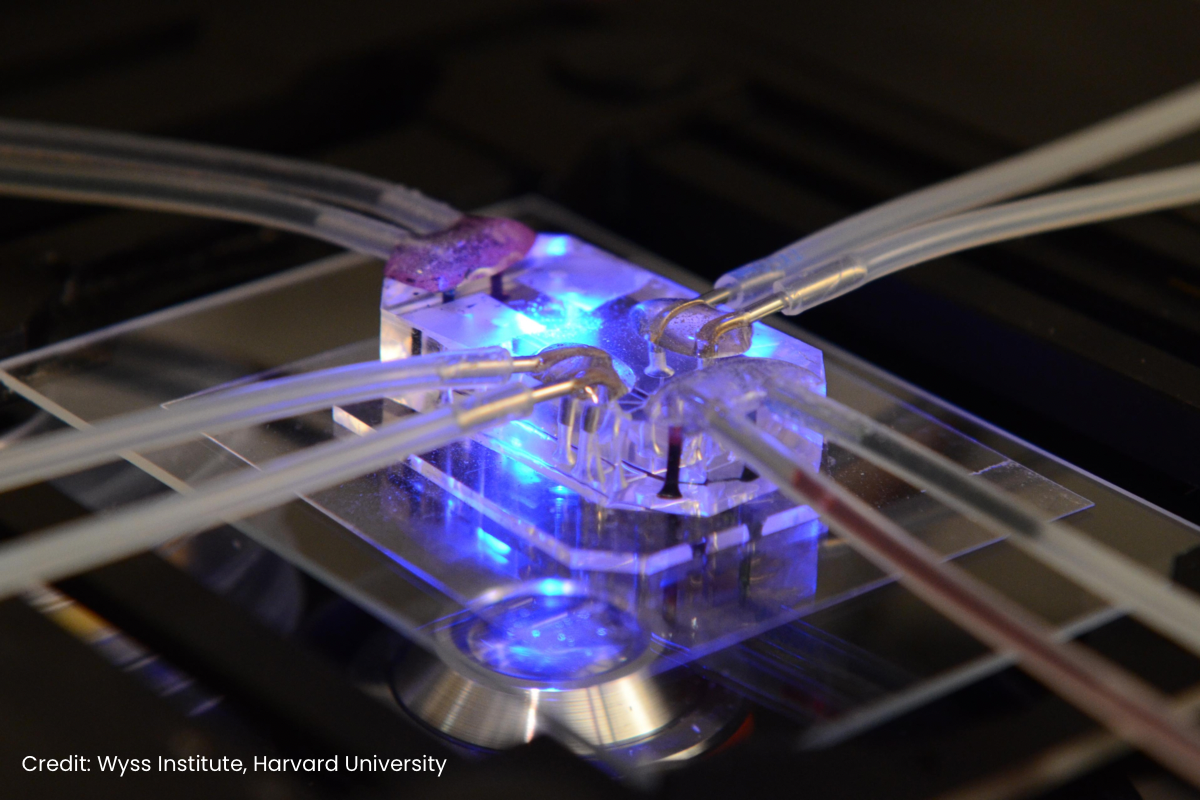
A human organ-on-a-chip. These miniature devices use living human cells to mimic the function of organs such as the lung, liver, gut, and heart, helping researchers study disease and test treatments using human biology rather than animal models.
Twenty-odd years ago, as an undergraduate genetics student, I watched a mouse limp around its cage after a footpad injection. That image has stayed with me and was the first thing that came to mind when I started thinking about animal-based research. Of course, a significant amount of time has passed since then and today that same procedure of injecting adjuvant for antibody production requires explicit ethical justification to an institutional committee. Simultaneously, in vitro recombinant antibody techniques are shifting the paradigm toward methods that don't require animals for this work at all. Non-Animal Methods or Novel Approach Methodologies (NAMs), depending on whom you ask, are reshaping the way we assess chemical safety, understand disease and develop new medicines. Considering the poor predictive power of animal models for human outcomes to date, NAMs have the potential to provide both better scientific outcomes while being more ethical as well. For students entering the life sciences today, this shift represents both an exciting opportunity and a complex challenge.
How can NAM impact animal-based research and testing?
Novel approach methodologies include in vitro (living cell/tissue), in chemico (biochemical), or in silico (computational) methods. Among the most promising NAM technologies are complex cell culture systems, stem cell technologies, 3D tissue engineering, microphysiological systems, and organ-on-chip platforms, alongside increasingly powerful computational modelling approaches. All of these have the potential to eliminate the use of animals in research and toxicology testing, however not necessarily through a one-to-one replacement. The use of human tissues and cells eliminates the need for extrapolation or translation from a different species, biochemical assays provide a clearer mechanistic understanding of pathologies and computational methods can simulate responses at a much faster and statistically more robust manner than experimental methods. Combinations of these three methods are significantly more powerful as they provide complementary information and a more holistic picture. So in short, while NAM could be used in the same applications as animal testing, they are very different by design and require a paradigm shift to become the default method. Momentum is building in this field; in 2023, the United States passed the FDA Modernization Act 2.0, formally removing the requirement for animal testing before advancing to human clinical trials and in 2025 the NIH announced that new funding opportunities will favor NAM to prioritize non-animal methods.
What are current barriers to a wider adoption of NAM?
From a technical perspective, whole physiological systems or multi-system effects e.g. the development of cancer or impairment of the reproductive system are challenging to model. Furthermore, it is challenging to model effects in different tissue types that typically make up an organ e.g. vascularization of cells. This is where novel approaches and cutting edge technologies can make the most significant impact and where in fact, where some of the most exciting developments are emerging, e.g. organoids-on-chips and even an 18-organ microphysiological system or ‘body-on-a-chip’.
Many remaining barriers are perceptual rather than technical. Regulatory scientists and risk assessors who are unfamiliar with NAM may distrust results even if they are robust because it is difficult to compare to animal methods directly. There are geographical and sector-level inconsistencies as well, e.g. a method accepted for cosmetics regulation in Europe may face a completely different evidentiary standard in agrochemicals or pharmaceuticals. In the USA, while the FDA Modernization Act 2.0 applies to pharmaceuticals, there is still no federal ban on animal testing for cosmetics, even as California and nine other states have moved independently to ban the sale of cosmetics tested on animals
A new philosophy
The wider adoption of NAM implicates a shift in how evaluations are interpreted. For example in toxicity testing, general risk can be shifted to a more nuanced approach, considering the actual exposure and delivery mechanisms. Rather than replicating a single animal study, the approach integrates multiple streams of data which includes biokinetic models, bioactivity assays and mechanistic pathway information to build a richer, more human-relevant picture of risk. The era of precision medicine has made the limitations of animal models increasingly visible, and the case for human-relevant methods only strengthens as biological understanding becomes more granular. The challenge of replacing animal models is truly a scientific one; where scientists with a deep understanding of their particular area of expertise can take the lead to determine the validity and applicability of NAM, actively sharing data and best practices across institutions, and ensuring that new regulations do not mandate animal-based testing where in vitro methods are already adequate.
What can we do?
Regulatory bodies, contract research organisations, government scientists, industry, academia and the public can all play a role in advancing the development of NAM. The next generation of researchers and free-thinkers with a passion for the welfare of animals can significantly impact increased awareness of current NAM and their limitations, driving new developments to the benefit of science and ethics. The mission is not simply to swap one test for another. It is to creatively reconfigure how we understand pathologies, hazards and risk and use our scientific advancement to build systems and processes that are better at predicting and understanding disease while simultaneously being more humane.
References
Frühwein, H., & Paul, N. W. (2025). "Lost in translation?" Animal research in the era of precision medicine. Journal of Translational Medicine, 23(1), 152.
Poh, W. T., & Stanslas, J. (2024). The new paradigm in animal testing – "3Rs alternatives." Regulatory Toxicology and Pharmacology, 153, 105705.
Quintard, C., Tubbs, E., Jonsson, G. et al. (2024). A microfluidic platform integrating functional vascularized organoids-on-chip. Nature Communications 15, 1452.
Sewell, F., et al. (2024). New approach methodologies (NAMs): identifying and overcoming hurdles to accelerated adoption. Toxicology Research, 13(2), tfae044.
Wang J, Zhang H, Qu Y, Yang Y, Xu S, Ji Z, Wang Y, Zhang X, Luo Y. (2025). An eighteen-organ microphysiological system coupling a vascular network and excretion system for drug discovery. Microsystems & Nanoengineering. 2025 May 14;11(1):89.
The FDA Modernization Act 3.0 is Ready to be Fully Voted on in the House of Representatives
By Ismael Perez, Digital Marketing Specialist for the Better Science Campaign
The FDA Modernization Act 3.0 is a bill that directs the U.S. Food and Drug Administration (FDA) to fully implement requirements to reduce unnecessary animal testing in drug development. Although no specific date has been set for the full House floor vote at the time this article is written, it will most likely be scheduled soon unless higher-priority bills are voted on first. After being fully voted on in the House of Representatives, the bill will go to the president’s desk to be signed into law. Having passed unanimously in the Senate and the House Energy and Commerce Committee by a unanimous 44-0 vote, and with no major organized opposition, the bill has a high likelihood of being signed into law.